

The inevitable crisis facing global sports its growing inability to captivate younger generations appears increasingly insurmountable.
The lack of interest among young people is no longer limited to their reluctance to actively participate in sports; it has extended to sports as a product in its entirety.
According to a recent McKinsey / Nielsen study, 90% of people who consume sports through traditional television are over the age of 35.
The sports “product” is aging. As a result, it is now being offered through multiple alternative channels, with its survival increasingly dependent on modern methods of distribution.
Web TV, smartphones, and rapidly expanding platforms such as DAZN, Twitch, and Amazon, alongside traditional broadcasters are all competing for a share of essentially the same audience. But how much sport can this audience realistically consume?
Broadcasting rights remain anchored to traditional media. Millennials, however, would likely feel far more comfortable spending their time and money, if the product were delivered directly through social media.
This desire reflects new social needs and a new mode of communication one that most of us either ignore or, more accurately, have not yet learned how to properly evaluate.
A major live football match today inherently requires a “second screen” and simultaneous engagement on social platforms. Real-time commentary no longer focuses solely on the match itself, but on the entire ecosystem of the sporting event.
It is shocking to realize that more than half of people who claim an interest in sports learn match results directly from social media. Optimists call this progress; in reality, it represents a dramatic decline in genuine engagement.
Audiences no longer feel passion. The romantic notion of fandom is fading. Sports, the “match,” and major sporting events have become opportunities for social interaction, peer engagement, and participation in trends rather than expressions of devotion.
We are rapidly approaching an “entertainment-first” model similar to how sports are perceived in the United States, where the concepts of a hostile stadium, atmosphere, and active fan participation are minimal.
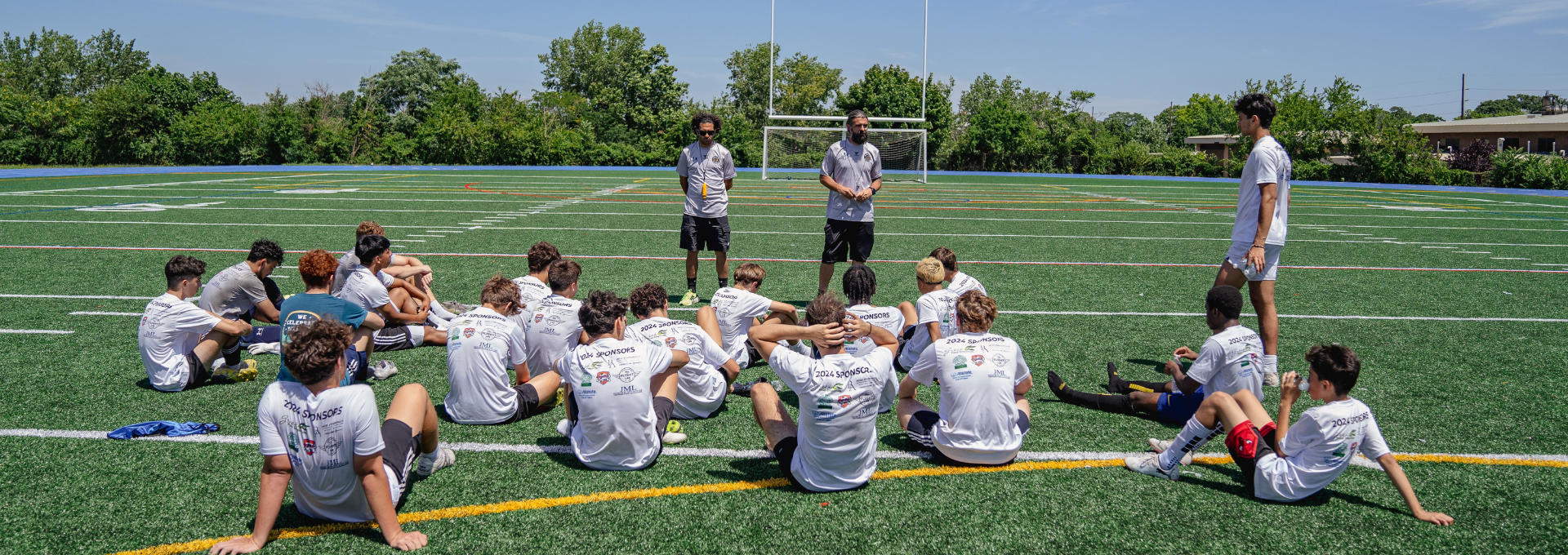
Traditional sports no longer excite millennials. A 90-minute football match feels like a test of endurance and sustained attention.
Football and other popular sports, as we once defined them, appear boring to a world that moves at lateral speeds and grows increasingly distant due to advanced communication systems.
Time has become our most valuable resource. A football match often feels and perhaps truly is more of a waste than an investment.
In sports with undefined durations, such as tennis, the situation becomes even more dramatic, especially for younger or casual viewers.
We ask children who actively shape outcomes in simulators and video games to devote more than three hours to a spectacle that appears painfully dull to their eyes and minds.
Recently, the CEO of a football giant like Liverpool FC stated in El País that Liverpool’s biggest rival is not Guardiola’s Manchester City, but Fortnite.
The real opponent today is attention.
The era when a father would take his son by the hand, lead him to the stadium, and initiate him into the ritual and culture of football has passed irreversibly.
Not because children no longer like football, but because there is now an unprecedented abundance of choices and an overwhelming need to be “different.”
Many parents now attempt to connect with their children through video games, seeking entry points into an industry that actively resists adult intrusion after all, adult presence threatens a $240 billion industry.
Once again, the key factor is time. Competition has always been about time, and today moments are scarce and precious. It is virtually impossible for an adult to keep pace with a child’s activities many of which they struggle even to understand.
Children today can fragment their time across multiple tasks with remarkable adaptability: playing a game, chatting through a console, meeting peers from across the globe, sharing school news all while holding a controller or smartphone.
The sports business has attempted to approach this new world through e-sports. Real teams, real crests, real histories serve merely as vehicles for engagement but the core remains virtual.
Commercial necessity has reshaped the system, no longer recognizing teams as cultural symbols but as profit-driven entities.
This shift does not merely alter identity, it threatens the social role of sport itself.
Federations, leagues, and the entire sports ecosystem are desperately searching for ways to attract younger audiences.
Academies and school sports are positive steps, but in a few years we may lack people willing to consume the product at all.
Efforts to make sports more appealing through game-like events remain, at best, misguided and far removed from what children truly want.
Radical regulatory proposals are now being discussed in elite European leagues: reducing effective playing time in football, five substitutions, mandatory cooling breaks, four-point shots in basketball, and drastic time reductions in tennis, including eliminating second serves and shortening Grand Slam matches.

Traditionalists recoil at these changes, but resistance has weakened. Even Wimbledon has embraced tie-breaks once considered unthinkable.
Myths have collapsed. Ideological schools of football have disappeared. The romantic clash of philosophies is gone even among the biggest clubs.
Football was once provocative, raw, even cynical. Today it has become standardized and directionless.
In its attempt to mimic video games faster pace, more goals, sport has lost its soul. Where video games once chased realism, reality now imitates fantasy.
Sports have aged precisely because they tried to appear young without understanding youth culture or the reasons behind disengagement.
In Greece, sports were once rooted in children running freely in streets and empty lots, each with their idol and favorite team. Those traditions are fading.
The anxious Sunday family lunch before kickoff has become pizza on the couch and eventually an indifferent scroll through headlines and “news.”
The real fear is not the decline of sport, but the erosion of what sport represents: emotion, community, identity.
This is not a matter of simply promoting sports in schools. The issue is cultural in an era of immediacy, of “all or nothing,” of “now or never.”
The challenge is vast. With rising childhood obesity, inactivity, and limited urban activities, finding alternative paths to reawaken interest is the true bet.
For years, we have polished the branches instead of watering the roots.
Children chase unrealistic superhero ideals imposed by us and suppress their greatest weapon: imagination.
That is what virtual reality filters out. And that is where our institutional focus must return.
The sports of the future must be real, tangible, and lived not virtual.
This is not nostalgia.
It is the only way to rediscover youth in a world that is aging dangerously fast.